Specialised & Procedural Cardiology
Delivering the full spectrum of contemporary interventional cardiology.
Dr Khavandi has specialist expertise across both coronary intervention and cardiac rhythm management — a combination that has become increasingly uncommon in modern cardiology.
This breadth of expertise allows patients requiring procedural treatment to access the full spectrum of contemporary techniques across both coronary artery disease and cardiac rhythm disorders, providing continuity from diagnosis through to intervention where appropriate.
NHS base
Royal United Hospital Bath
Consultant Interventional Cardiologist since 2013
Emergency team
Bristol Heart Institute
Part of the 24/7 primary PCI heart attack team
Specialist profile
National
Referred to for leadless defibrillator technique and minimal-scar implantation
Coronary Angioplasty
Contemporary coronary intervention.
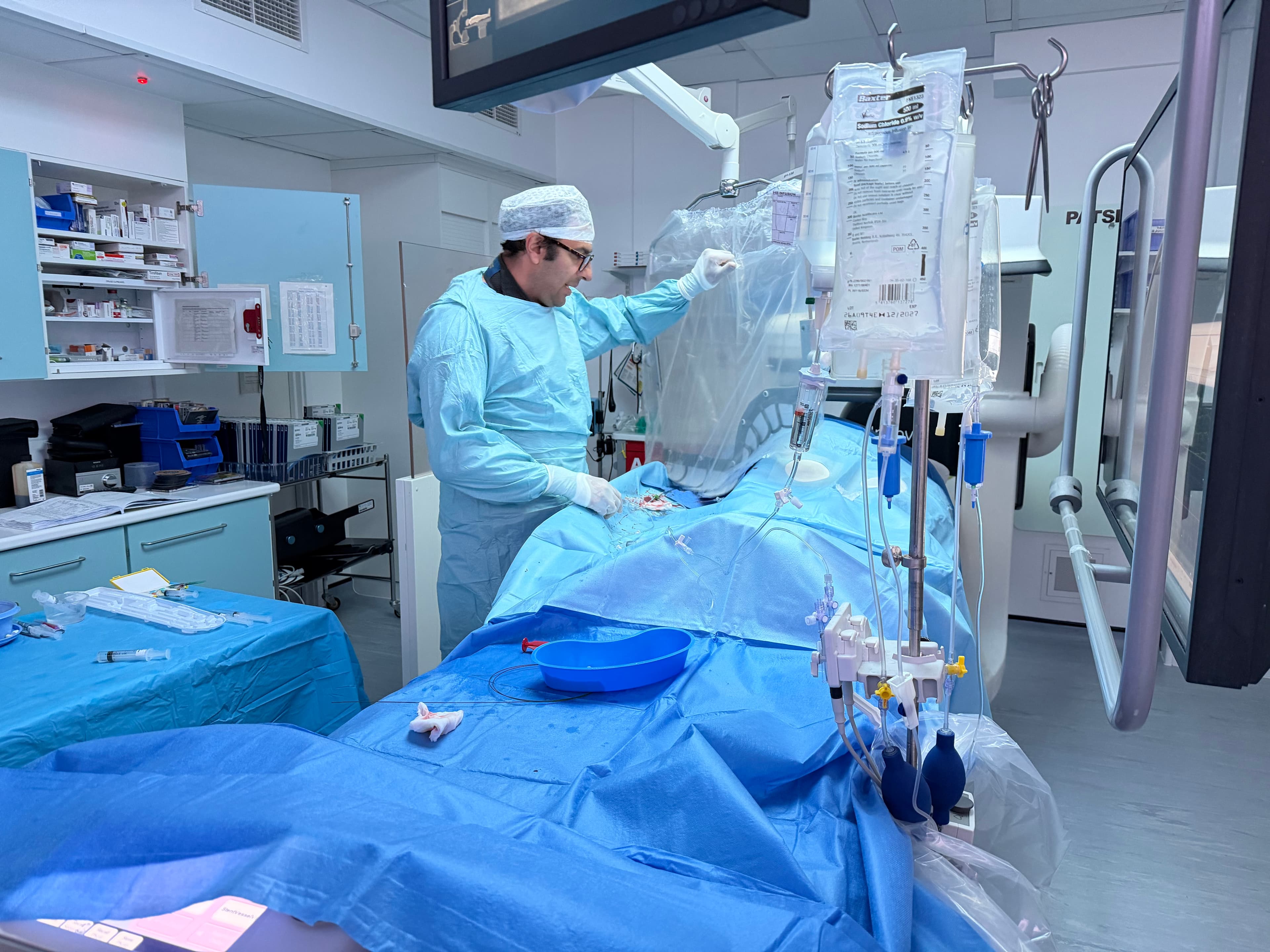
Dr Khavandi is a contemporary coronary intervention operator, performing the majority of procedures via the radial artery (wrist), statistically the safest access route for most patients.
He offers the full spectrum of modern coronary intervention techniques, including:
Coronary angiography
Coronary angioplasty and stenting (PCI)
Rotational atherectomy
Intravascular imaging
Chronic total occlusion (CTO) intervention
Laser-assisted coronary angioplasty
Modern adjunctive technologies are used where appropriate to optimise procedural safety, precision and long-term outcomes.
Rhythm Device Implantation
Complex pacing across the full range of contemporary devices.
Dr Khavandi is a complex pacing operator with expertise across the full range of contemporary cardiac rhythm devices.
Permanent pacemakers
Complex physiological pacing
Cardiac resynchronisation therapy (CRT) for heart failure
Implantable cardioverter-defibrillators (ICDs)
Subcutaneous and leadless defibrillator technologies
He implanted the first new-generation leadless defibrillator in Swindon and has a specialist interest in implantation techniques that improve procedural outcomes, minimise visible scarring and optimise the cosmetic appearance of implanted devices wherever possible.
Refining the Patient Experience
More than technical success.
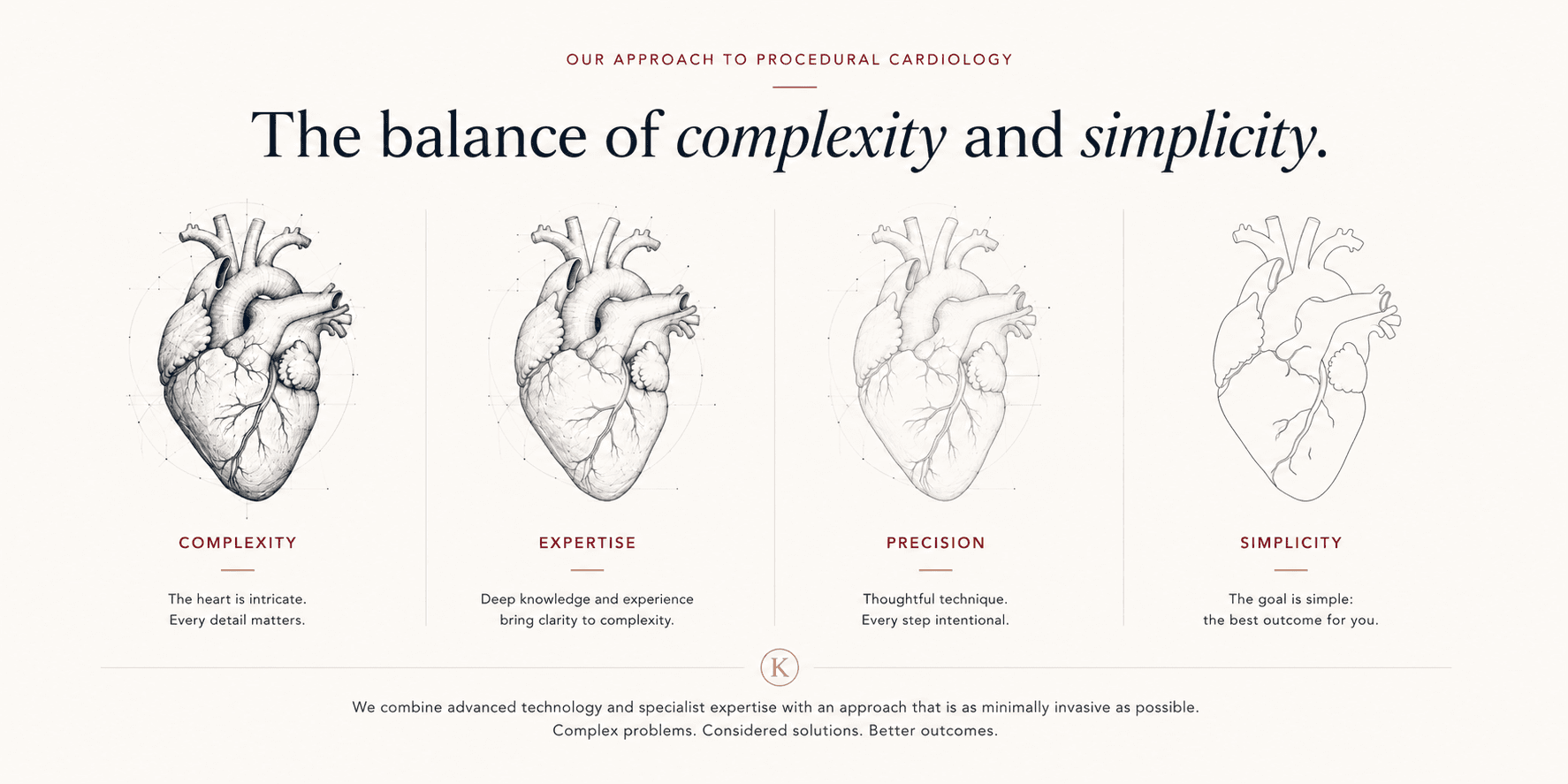
Modern procedural cardiology is about more than technical success. Careful planning, meticulous technique and attention to the patient’s overall experience can make a significant difference to comfort, recovery and long-term satisfaction.
Making procedures as comfortable as possible
For many patients, the anticipation of a cardiac procedure is often more daunting than the procedure itself.
Dr Khavandi understands that anxiety is entirely natural. One of his priorities is to ensure that patients feel informed, reassured and comfortable throughout their treatment.
This begins with taking the time to explain the procedure clearly, answer questions and ensure patients know exactly what to expect. During the procedure itself, generous use of local anaesthetic and, where appropriate, conscious sedation helps maximise comfort.
A common reflection from patients afterwards is that the experience was considerably easier than they had anticipated.
Minimising trauma and scarring
Where clinically appropriate, Dr Khavandi uses smaller, lower-profile equipment to minimise the impact of procedures on the body.
For cardiac rhythm device implantation, particular emphasis is placed on careful surgical technique, minimising incision size, reducing tissue trauma and optimising the cosmetic appearance of implanted devices. Internal dissolvable stitches are generally used, meaning there are usually no visible external sutures and little or no complex wound aftercare.
As an advocate for surgical skills training within UK cardiology, and a founding faculty member of the Essential Surgical Skills for Cardiologists course, Dr Khavandi has worked closely with plastic surgeons to refine implantation techniques that improve both functional and cosmetic outcomes.
Over time, he has developed a reputation for seeing patients with previously problematic cardiac devices, including uncomfortable pacemakers, prominent or protruding devices, difficult generator positions and unsatisfactory scarring. Wherever possible, the priority is always to avoid unnecessary intervention. However, for carefully selected patients, there are often reconstructive options that can improve comfort, appearance or both.
Dr Khavandi is also one of a small number of UK operators with experience managing devices implanted in more unusual anatomical positions, including beneath the breast or in the axillary (armpit) region, providing additional expertise for patients with more complex device-related problems.
Experience matters
Technical expertise is only one part of delivering an excellent procedural outcome. Experience also brings judgement, efficiency and the confidence to keep procedures as straightforward as possible without compromising meticulous attention to detail.
Dr Khavandi is an experienced procedural cardiologist whose approach combines calm efficiency with careful planning and meticulous technique.
The objective is never simply to work quickly. It is to avoid unnecessary complexity, minimise time on the operating table wherever appropriate and ensure that every step of the procedure contributes meaningfully to the final outcome.
This frequently translates into less procedural trauma, quicker recovery and a better overall patient experience.
Personalised Surgical Pathways
Choosing the right treatment is just as important as performing the procedure itself.
Although many patients benefit from coronary angioplasty and stenting, others achieve a better long-term outcome through cardiac surgery, particularly where minimally invasive or robotic techniques are available.
Dr Khavandi has developed longstanding professional relationships with a national network of leading minimally invasive cardiac surgeons across the United Kingdom. Where surgery is likely to provide the most appropriate treatment, patients can be guided towards centres with particular expertise in robotic and minimally invasive coronary artery bypass surgery and valve operations.
This allows treatment recommendations to be tailored to the individual patient, ensuring that the chosen pathway reflects the treatment most likely to deliver the best long-term outcome rather than being limited to a single procedural option.
Second Opinions
If you are uncertain about what has been recommended.
A second opinion from an independent interventional cardiologist is entirely reasonable — and often valuable. Dr Khavandi will review your angiogram, clinical history, and the proposed management plan, and provide an honest, independent assessment.
There is no institutional interest in recommending procedures. If the recommendation is right, he will tell you so. If there is a different or better approach, he will explain it clearly.
Continuity from diagnosis through to intervention — under the care of the same consultant.